Tarot Card Reading: Unlocking Wisdom Through Symbols and Intuition
For centuries, tarot cards have fascinated seekers, mystics, and curious minds alike. More than just a tool for fortune-telling, tarot card reading is a profound practice that combines symbolism, archetypes, and intuition to help people gain insight into their lives. Today, tarot is enjoying a resurgence as people look for meaningful ways to navigate uncertainty, connect with their inner selves, and explore the mysteries of existence.
In this blog, we’ll explore the history of tarot, how it works, its benefits, common misconceptions, and ways you can begin your own tarot journey. By the end, you’ll see tarot not as a mystical gimmick but as a valuable mirror that reflects the wisdom within you.
The History of Tarot
The tarot deck as we know it originated in 15th-century Europe, primarily in Italy. Initially, tarot cards were created as a game known as tarocchi, enjoyed by nobility and aristocrats. It wasn’t until the 18th and 19th centuries that tarot began to be associated with mysticism and divination, thanks to the influence of occult traditions and secret societies.
The tarot deck itself draws on centuries of cultural, religious, and philosophical symbolism. Over time, it became a tool not only for entertainment but also for spiritual exploration and guidance. Today, millions of people worldwide use tarot as a practice for personal reflection, empowerment, and decision-making.
Anatomy of a Tarot Deck
A standard tarot deck contains 78 cards, divided into two categories:
The Major Arcana (22 cards)
These cards represent powerful archetypes and life lessons. They symbolize significant themes and transformative moments on the journey of self-discovery. Famous cards include The Fool, The Lovers, The Tower, and The World.
The Minor Arcana (56 cards)
These cards are divided into four suits—Wands, Cups, Swords, and Pentacles—each corresponding to different aspects of life:
Wands: Creativity, passion, action
Cups: Emotions, relationships, intuition
Swords: Thoughts, challenges, truth
Pentacles: Work, finances, material well-being
Each suit contains numbered cards (Ace through 10) and four court cards (Page, Knight, Queen, and King), much like a traditional deck of playing cards.
Together, the Major and Minor Arcana provide a symbolic map of human experience—covering everything from everyday concerns to profound spiritual lessons.
How Tarot Card Reading Works
Contrary to popular belief, tarot is not about predicting the future with certainty. Instead, it is a tool for reflection and guidance. Here’s how a reading typically works:
Setting the Intention
A reading often begins with the seeker (known as the querent) asking a question or focusing on an area of life they wish to explore. Questions might range from “What can I do to improve my career?” to “How can I bring balance into my relationships?”
Shuffling and Drawing Cards
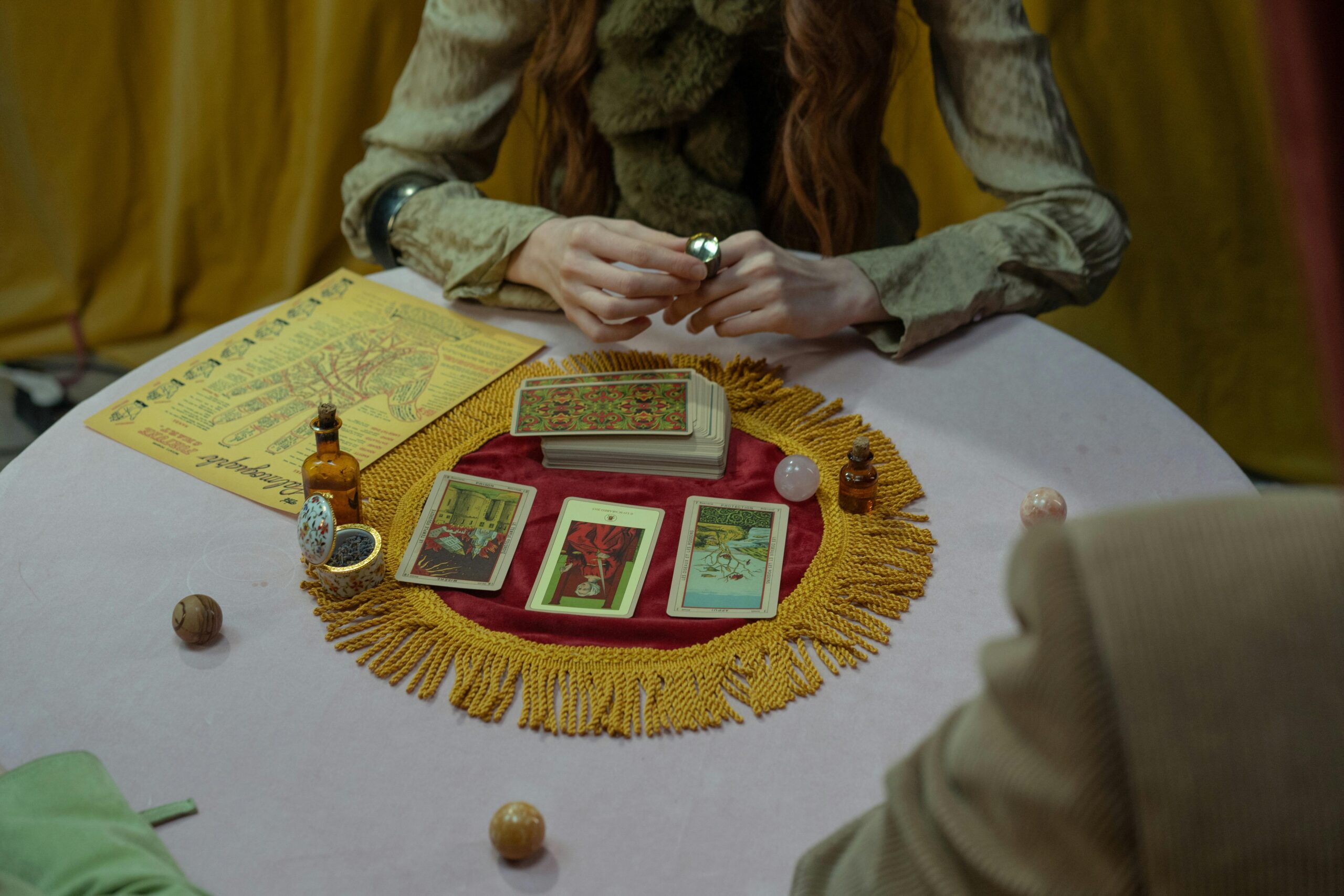
The reader (or querent) shuffles the deck while concentrating on the question. Cards are then drawn and placed in a specific layout, known as a spread.
Interpreting the Spread
Each card has symbolic meanings, but interpretation also depends on the card’s position in the spread and the intuition of the reader. For example, drawing The Tower in a “past” position may indicate upheaval already experienced, while drawing it in a “future” position may suggest upcoming change.
Integrating the Message
The real power of tarot lies in reflection. The imagery and symbolism act as prompts for the querent to consider perspectives they may not have thought of otherwise. The insights can provide clarity, reassurance, or encouragement for action.
Popular Tarot Spreads
There are countless tarot spreads, from simple one-card draws to elaborate multi-card layouts. Some of the most common include:
One-Card Pull: Provides quick insight or a daily message.
Three-Card Spread: Often interpreted as past, present, future or situation, action, outcome.
Celtic Cross: A ten-card spread that provides an in-depth look at the querent’s situation, including external influences and potential outcomes.
Relationship Spread: Used to explore dynamics between individuals.
Benefits of Tarot Card Reading
Tarot offers a wide range of benefits that extend far beyond “fortune-telling.” Here are some of its key contributions:
Self-Reflection and Awareness
Tarot encourages people to look inward, identify hidden thoughts or feelings, and consider alternative perspectives.
Clarity in Decision-Making
While tarot doesn’t provide definite answers, it can highlight potential paths, consequences, or opportunities, helping people make more informed choices.
Emotional Healing
Tarot can help people confront fears, release emotional blockages, and find peace with past experiences.
Spiritual Growth
For those on a spiritual path, tarot serves as a companion for exploring archetypes, synchronicities, and the deeper mysteries of life.
Empowerment
By emphasizing free will, tarot empowers individuals to take responsibility for their choices and trust their inner guidance.
Misconceptions About Tarot
Despite its growing popularity, tarot is still surrounded by myths and misunderstandings. Let’s clear a few of them:
“Tarot predicts the future.”
Tarot does not dictate fixed outcomes—it shows possibilities, patterns, and influences.
“Only psychics can read tarot.”
Anyone can learn tarot. While intuition plays a role, knowledge of card meanings and practice are just as important.
“The Death card means literal death.”
The Death card typically symbolizes transformation, endings, and new beginnings—not physical death.
“Tarot is evil or dangerous.”
Tarot is simply a tool of symbolism. Its use depends on the intention and mindset of the reader.
Tips for Beginners in Tarot
If you’re curious about starting your tarot journey, here are a few tips:
Choose a Deck That Resonates
Popular options include the Rider-Waite-Smith deck (great for beginners) and the Thoth Tarot. Many modern decks also exist, featuring diverse themes and artwork.
Learn the Basics
Start by studying the Major Arcana before diving into the Minor Arcana. Many books and online resources provide simple explanations of card meanings.
Keep a Tarot Journal
Record your readings, impressions, and reflections. Over time, you’ll develop a personal relationship with the cards.
Practice Regularly
Pull a card daily and reflect on how its message applies to your life.
Trust Your Intuition
While traditional meanings are important, your intuitive response to the imagery is equally valid.
Tarot in the Modern World
Today, tarot has evolved beyond private readings in dimly lit rooms. It is part of a broader cultural movement toward mindfulness, wellness, and spiritual exploration. Some modern uses include:
Therapeutic Settings: Therapists sometimes use tarot as a tool for clients to project thoughts and emotions.
Creative Inspiration: Writers, artists, and entrepreneurs use tarot to spark ideas and solve creative blocks.
Mindfulness Practice: Tarot is increasingly integrated into meditation, journaling, and personal rituals.
Community and Connection: Tarot circles and workshops create spaces for people to share insights and support one another.